
Ultimate Guide to Healthcare Marketing in 2026
In 2026, healthcare marketing is no longer optional; it is the primary driver of patient acquisition, retention, and practice growth. Patients research providers online before picking up the phone. Google processes over 1 billion health-related searches daily, while social platforms and review sites shape first impressions faster than any billboard ever could. Practices that master integrated digital strategies see 3–5× higher patient volumes and stronger lifetime value.
This Ultimate Guide to Healthcare Marketing covers every essential channel, strategy, and tactic proven to work in 2026. You will learn how to combine search engine optimization, content marketing, social media marketing, paid marketing, email marketing, reputation management, brand management, e-commerce marketing, healthcare PR, and events & vendor management into a cohesive system that delivers measurable ROI while remaining fully HIPAA-compliant.
Chapter 1: The Current Healthcare Marketing Landscape
Patient behavior has permanently shifted. 76% of patients begin their journey with a search engine, 68% check reviews before booking, and 59% prefer video content over text. At the same time, Google’s Helpful Content updates and AI overviews reward authentic, experience-driven marketing while penalizing generic or overly salesy material.
Key 2026 trends include the following:
- Voice and multimodal search dominance
- AI-generated content requiring human oversight
- Stricter HIPAA and advertising compliance
- Rising importance of personal branding and influencer partnerships
- Demand for measurable ROI across every channel
Successful practices no longer treat marketing as an expense; they treat it as a revenue-generating clinical support function.
Chapter 2: Search Engine Optimization Getting Found When Patients Search
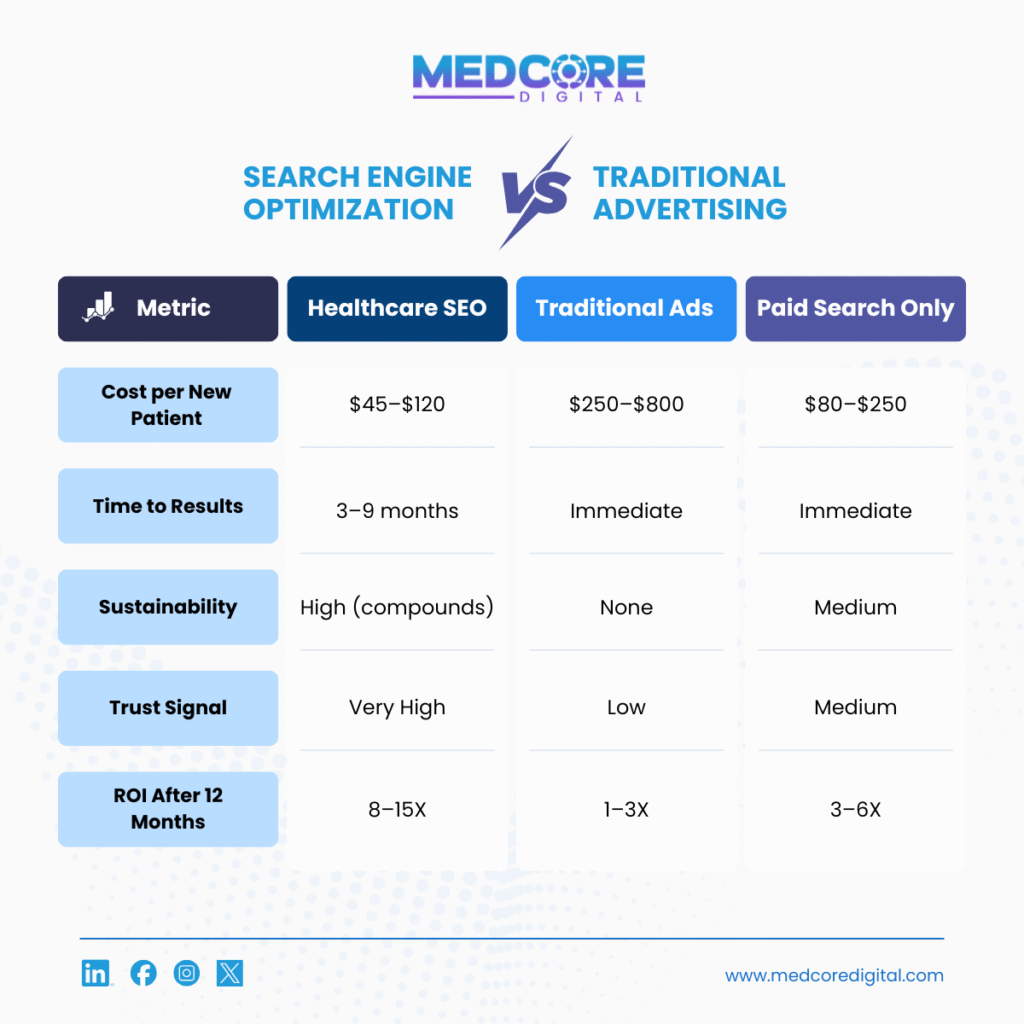
Healthcare SEO remains the foundation of sustainable growth. When patients type “best cardiologist near me” or “telehealth for anxiety,” your practice must appear at the top.
Effective medical SEO in 2026 includes:
- Technical optimization (Core Web Vitals, schema markup, mobile-first design)
- Local SEO mastery (Google Business Profile optimization, review generation, geo-targeted content)
- Content that satisfies E-E-A-T (Experience, Expertise, Authoritativeness, Trustworthiness)
- Voice search optimization for conversational queries
Chapter 3: Content Marketing: Turning Information into Patients
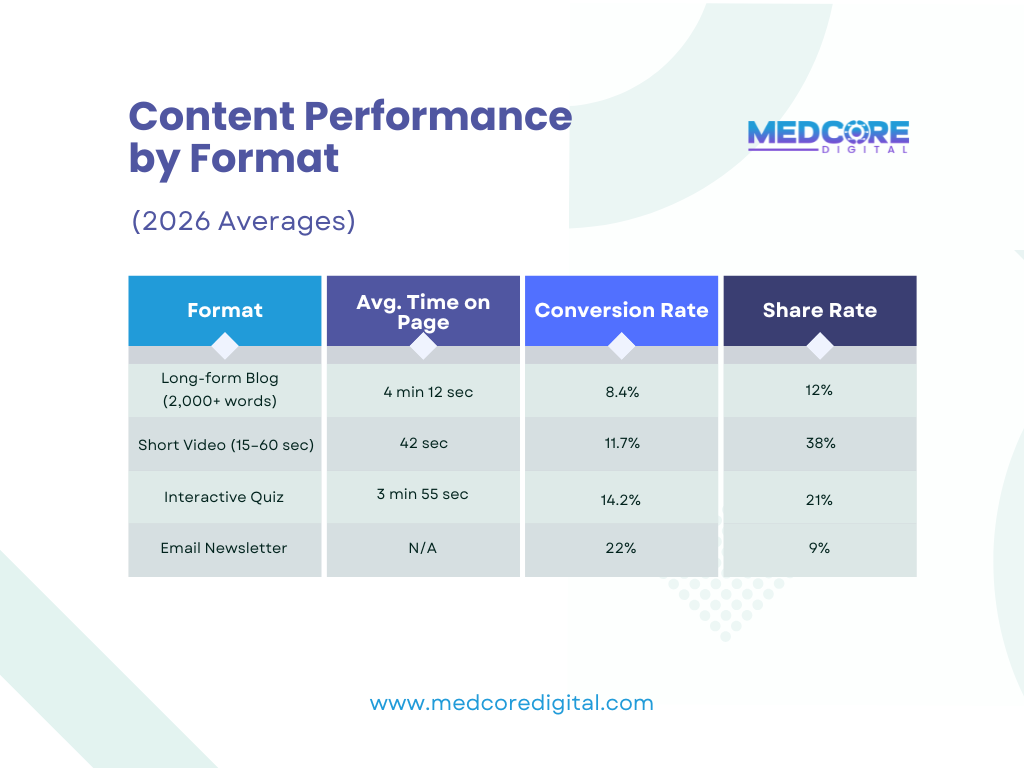
Content marketing educates, builds trust, and ranks. In 2026, long-form pillar content combined with short-form video snippets performs best.
Successful healthcare content includes the following:
- Condition-specific guides
- Patient journey stories (HIPAA-compliant)
- Explainer videos and infographics
- Myth-busting “Fact vs Fiction” series
Chapter 4: Social Media Marketing Humanizing Your Practice
Social media marketing lets patients see the faces behind the white coats. In an era where trust is earned through authenticity rather than polished advertisements, platforms reward consistent, genuine posting with powerful algorithm boosts.
According to 2025–2026 benchmarks, Instagram remains the strongest platform for healthcare, with an average engagement rate of 3.7%, followed closely by LinkedIn at 3.3% and Instagram Reels at 2.7%. Short-form video continues to dominate, with Reels and TikTok-style content driving significantly higher reach and interaction than static posts. Younger patients (Gen Z and Millennials) increasingly turn to TikTok and Instagram for health information, with 47% of Gen Z using these platforms as a primary source.
The real power of social media in healthcare lies in its ability to humanize your practice. When patients see a compassionate physician explaining a procedure in plain language, a nurse sharing a day in the life, or the team celebrating a patient milestone (with proper consent), they form an emotional connection that no website alone can create. This human touch builds trust faster than traditional marketing and directly influences booking decisions.
Why Social Media Works So Well for Healthcare in 2026
Patients no longer want corporate messaging—they want real people they can relate to. Short-form video (15–60 seconds) performs exceptionally well because it matches modern attention spans and allows quick, digestible education. Platforms prioritize authentic, value-driven content, especially when it comes from licensed medical professionals.
Key benefits include the following:
- Higher engagement rates compared to traditional ads
- Improved brand recall and patient loyalty
- Direct pathway from awareness to appointment booking
- Strong E-E-A-T signals that support overall SEO efforts
However, success requires strict adherence to HIPAA guidelines. Never share protected health information (PHI), confirm patient identities publicly, or give individualized medical advice in comments. All content must remain educational and general.
Chapter 5: Paid Marketing Instant Patient Acquisition
Paid marketing in healthcare fills appointment slots fast. Google Ads, Facebook/Instagram, and LinkedIn campaigns deliver immediate results when HIPAA-compliant.
2026 benchmarks show:
- Average ROAS: 3.2–5.8×
- Cost per booked appointment: $65–$180
- Highest performers combine search + retargeting
Chapter 6: Email Marketing Nurturing Relationships That Last
Email marketing in healthcare remains the highest-ROI channel for existing patients. HIPAA-compliant nurture sequences increase retention by 28–42%.
Key campaigns:
- Appointment reminders
- Wellness newsletters
- Re-engagement for lapsed patients
- Post-visit follow-ups
Chapter 7: Reputation Management, Protecting and Amplifying Trust
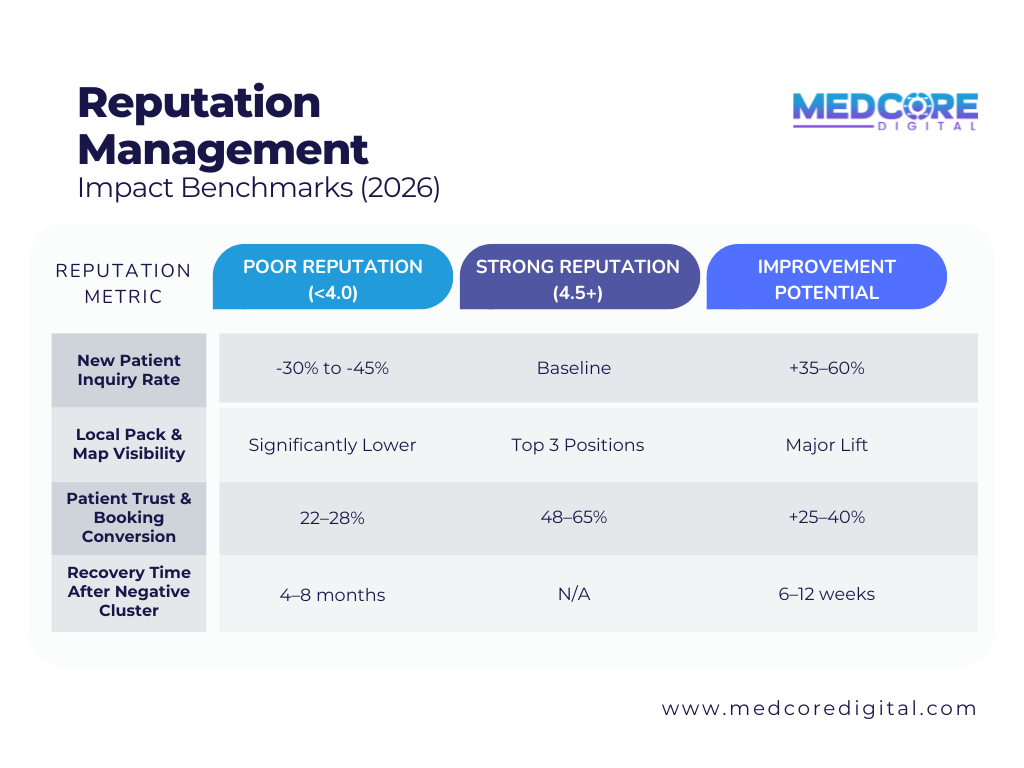
Reputation management is one of the most critical pillars of healthcare marketing in 2026. Online reviews and public perception directly influence patient decisions more than ever before. Studies consistently show that 84% of patients read online reviews before choosing a healthcare provider, and 40% will avoid a practice with an average rating below four stars. A single cluster of negative reviews can reduce new patient inquiries by up to 30%, damage local search visibility, and hurt your position in Google’s AI overviews.
In today’s digital environment, reputation is no longer just about managing complaints; it is about actively building and protecting trust at scale. Online reputation management involves continuous monitoring, strategic review generation, professional response protocols, and rapid crisis intervention when necessary.
The Real Impact of Reputation on Patient Acquisition
A strong online reputation acts as a silent salesperson working 24/7. Practices with consistent 4.5+ star ratings across Google, Healthgrades, Vitals, and Yelp see significantly higher click-through rates from local search results and map packs. Conversely, even three or four poorly worded negative reviews appearing in quick succession can trigger algorithmic distrust, lowering your visibility and eroding patient confidence.
Negative patient feedback often stems from non-clinical issues such as long wait times, billing surprises, poor communication, or unmet expectations. While these issues may feel minor internally, they carry heavy weight in the eyes of prospective patients who are already anxious about their health.
Core Components of Effective Reputation Management
A robust reputation management strategy includes four essential pillars:
1. Proactive Monitoring
Continuous tracking across Google Business Profile, Healthgrades, Vitals, RateMDs, Yelp, Facebook, and emerging review platforms. Real-time alerts allow practices to respond before small issues escalate into reputation crises.
2. Strategic Review Generation
Ethical, HIPAA-compliant systems that encourage satisfied patients to leave honest feedback. Simple post-visit text messages or email requests can increase positive review volume by 40–60% without violating privacy rules.
3. Professional Response Management
Every review, positive or negative, deserves a thoughtful reply. Prompt, empathetic, and HIPAA-safe responses demonstrate accountability and care. Well-crafted responses to negative reviews can convert up to 70% of dissatisfied patients back into loyal ones.
4. Crisis Response and Recovery
When negative feedback clusters or goes viral, a structured crisis PR plan prevents long-term damage. This includes coordinated messaging, platform reporting for fake or defamatory reviews, and transparent communication about improvements made.
Best Practices for Handling Negative Reviews
When responding to negative patient feedback, always follow these guidelines:
- Respond within 24–48 hours
- Never confirm or deny a patient relationship publicly (HIPAA)
- Express empathy without admitting liability
- Invite the patient to discuss concerns privately by phone or in person
- Highlight your commitment to continuous improvement
Chapter 8: Brand Management Standing Out with Credibility
In a crowded and increasingly competitive healthcare market, brand management is what separates good practices from unforgettable ones. A strong, cohesive, and compassionate brand identity creates emotional connections that drive referrals, support premium pricing, and foster long-term patient loyalty.
Patients today choose providers not only based on clinical expertise but also on how they feel about the practice. A well-defined brand communicates warmth, professionalism, trustworthiness, and approachability, qualities that resonate deeply in healthcare.
Why Brand Management Matters More Than Ever in 2026
Patients are overwhelmed with choices. Generic clinic websites and similar-sounding taglines no longer cut through the noise. A distinctive brand helps your practice stand out by clearly communicating your unique values, specialty strengths, and patient-first philosophy.
Effective healthcare branding achieves several key outcomes:
- Higher patient retention and word-of-mouth referrals
- Ability to command premium rates for elective and concierge services
- Stronger differentiation from corporate hospital systems and competitors
- Better employee recruitment and retention as staff feel proud to represent the brand
Key Elements of a Powerful Healthcare Brand
A successful brand strategy includes:
1. Brand Strategy & Positioning
Defining your core purpose, target audience, and unique value proposition.
2. Visual Identity
Logo, color palette, typography, and imagery that convey care, modernity, and trust.
3. Messaging Framework
Consistent tone of voice across all touchpoints from website copy to social media and patient communications.
4. Patient Experience Alignment
Ensuring every interaction (in-person, digital, and phone) reflects the promised brand experience.
5. Internal Brand Culture
Training staff so they live and deliver the brand promise daily.
Chapter 9: E-Commerce Marketing, Monetizing Digital Health Products
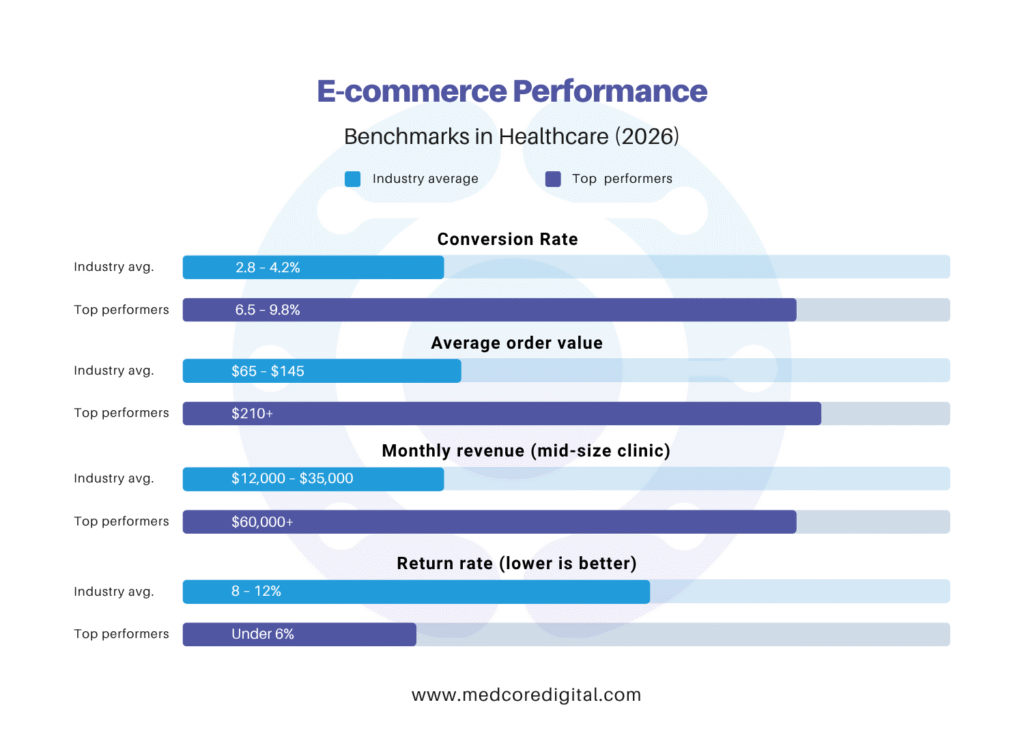
E-commerce marketing has become a major revenue stream for forward-thinking healthcare practices in 2026. Beyond traditional clinical services, many providers now successfully sell supplements, wellness products, at-home test kits, telehealth subscriptions, and medical devices directly to patients. When executed correctly, e-commerce can deliver healthy profit margins while strengthening patient relationships and increasing lifetime value.
The rise of telehealth and direct-to-consumer health products has created new opportunities. Practices that integrate compliant e-commerce strategies are generating additional monthly revenue ranging from $8,000 to over $75,000, depending on specialty and product range. Optimized product pages combined with targeted paid campaigns turn your website into a 24/7 revenue-generating asset.
Why E-Commerce Is Growing Rapidly in Healthcare
Patients increasingly prefer the convenience of purchasing recommended health products from a trusted source, their own provider, rather than generic online retailers. When a physician or nutritionist personally recommends a high-quality supplement or recovery device, conversion rates are significantly higher than standard retail.
Key opportunities include:
- Physician-formulated or curated supplement lines
- At-home diagnostic test kits
- Post-procedure recovery bundles
- Telehealth membership programs
- Branded wellness products (skincare, nutrition, fitness equipment)
However, healthcare e-commerce comes with strict compliance requirements. All advertising must avoid disease claims, remain HIPAA-compliant, and follow FDA guidelines for supplements and devices.
Essential Elements of Successful Healthcare E-Commerce Marketing
To maximize results, focus on these critical areas:
1. Optimized Product Pages
High-quality images, detailed but easy-to-understand descriptions, ingredient transparency, usage instructions, and clear benefit statements (without making medical claims). Well-structured pages with schema markup improve both user experience and search visibility.
2. Compliant Paid Advertising
Strategic use of Google Shopping, Performance Max, and Meta ads to drive qualified traffic. Campaigns must use restricted data processing and avoid prohibited health targeting.
3. Patient Education & Trust Building
Educational content that explains the science behind products, usage guides, and physician-backed recommendations (while staying within legal boundaries).
4. Seamless Checkout & Subscription Models
Easy checkout experience, multiple payment options, and subscription programs that improve customer retention and predictable revenue.
Common Challenges and How to Overcome Them
Healthcare e-commerce faces unique hurdles:
- Strict advertising policies on Google and Meta
- Risk of making unintentional disease claims
- Building trust for higher-priced items
- Managing shipping and fulfillment
By combining clinical credibility with smart digital marketing, e-commerce becomes a profitable extension of your patient care mission rather than a risky side project.
Chapter 10: Healthcare PR: Earning Media and Influencer Exposure
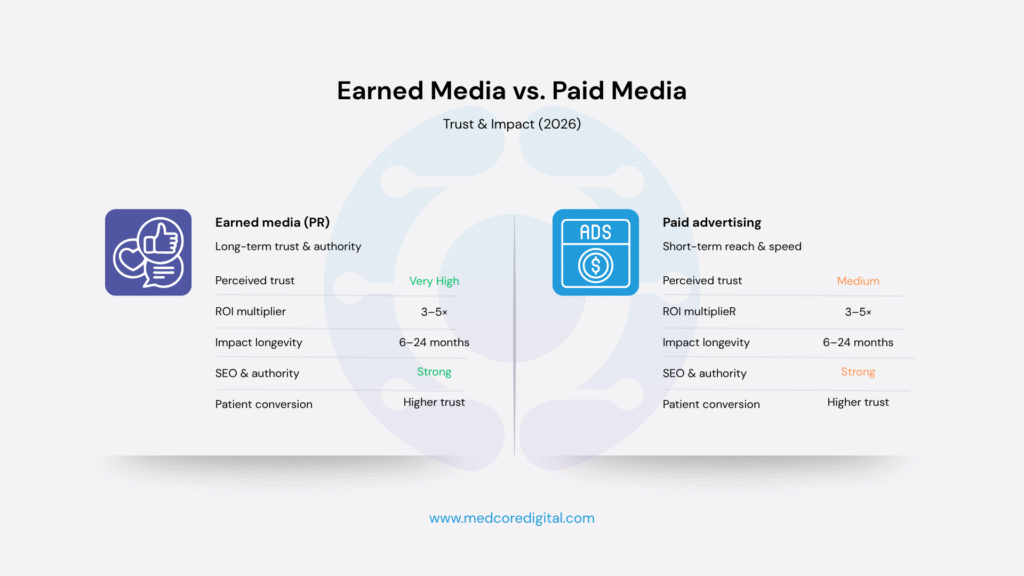
Healthcare PR remains one of the most powerful ways to build long-term credibility and authority. While paid advertising can deliver immediate results, earned media, being featured in reputable publications, podcasts, news outlets, and influencer partnerships, carries 3 to 5 times more trust than traditional ads.
In 2026, patients and referring physicians alike place higher value on third-party validation. A feature in a respected health magazine, a podcast interview with a leading physician, or a collaboration with a credible health influencer can dramatically elevate your practice’s reputation and drive high-quality patient inquiries.
The Unique Power of Earned Media in Healthcare
Earned media works because it feels objective. When a journalist, podcast host, or influencer chooses to feature your practice or physician, it signals expertise and trustworthiness to the audience. This third-party endorsement often leads to better engagement, higher conversion rates, and longer-lasting brand impact compared to self-promoted content.
Key benefits of strong healthcare PR include:
- Enhanced E-E-A-T signals for SEO
- Increased referral traffic from other professionals
- Greater ability to attract top clinical talent
- Stronger positioning for premium and elective services
Modern Healthcare PR Strategies That Deliver Results
Effective healthcare PR in 2026 goes far beyond traditional press releases. Successful approaches include the following:
1. Thought Leadership Campaigns
Positioning physicians as experts through bylined articles, expert commentary, and speaking opportunities.
2. Podcast and Video Interviews
Appearing on popular health and wellness podcasts reaches highly engaged audiences who actively seek trustworthy information.
3. Influencer Partnerships
Strategic collaborations with micro-influencers and health creators who align with your brand values. These partnerships must remain fully compliant and transparent.
4. Community Impact Stories
Highlighting charitable work, innovative treatment approaches, or community health initiatives that demonstrate your practice’s mission.
5. Crisis PR Preparedness
Having a ready response plan helps protect reputation during unexpected challenges.
Building a Sustainable PR Engine
The most successful practices treat PR as an ongoing strategic function rather than a one-off campaign. This includes consistent pitching, relationship building with journalists and producers, content repurposing, and measuring the downstream impact on website traffic and patient inquiries.
Medcore Digital’s healthcare PR helps practices craft compelling stories, secure meaningful media placements, build influencer partnerships, and manage reputation through earned channels. Their experienced team ensures all PR efforts remain fully compliant while maximizing visibility and trust.
When combined with strong digital marketing foundations, healthcare PR becomes a powerful amplifier that elevates your entire marketing ecosystem and positions your practice as a recognized leader in your field.
Chapter 11: Events & Vendor Management – Creating Memorable Experiences
Events & vendor management plays a powerful role in healthcare marketing by building community, strengthening relationships, and generating high-quality, warm leads. While digital channels dominate daily patient acquisition, in-person and hybrid events create emotional connections that are difficult to replicate online. From continuing medical education (CME) conferences for referring physicians to patient wellness days and health fairs, well-executed events deliver exceptional ROI when aligned with your overall marketing strategy.
In 2026, healthcare events have evolved into sophisticated experiences that blend education, engagement, and entertainment. Practices that master events and vendor management report 25–45% higher referral rates from physicians and significantly better patient retention compared to those relying solely on digital tactics.
Why Events Remain Highly Effective in Healthcare Marketing
Patients and referring doctors crave human connection. Events allow your practice to showcase expertise, demonstrate care philosophy, and create positive shared experiences in a low-pressure environment. A successful patient wellness day can generate dozens of qualified leads, while a well-organized CME conference can solidify referral relationships that last for years.
Key advantages of healthcare events include:
- Higher trust and emotional connection than digital ads
- Direct face-to-face interaction with decision-makers
- Opportunity to showcase your team and facility
- Long-term brand recall and word-of-mouth amplification
- Ability to collect high-intent leads through seamless registration and follow-up
However, poor execution from disorganized vendors to technical failures can damage your reputation. Flawless planning and vendor coordination are therefore non-negotiable.
Types of High-Impact Healthcare Events
Successful practices run two main categories of events:
1. Physician & Referral-Focused Events (B2B)
- CME-accredited conferences and workshops
- Dinner symposiums with guest speakers
- Specialist roundtable discussions
- Referral appreciation events
These events position your physicians as thought leaders and strengthen professional relationships with primary care providers and specialists.
2. Patient & Community-Focused Events (B2C)
- Annual wellness days and health screenings
- Women’s or men’s health seminars
- Chronic disease management workshops (diabetes, heart health, weight management)
- Vaccination drives and preventive care fairs
- Support group meetups and family health days
Patient events are particularly effective for brand building and direct lead generation.
Best Practices for Flawless Event Execution
To maximize ROI, every event should follow a structured approach:
1. Clear Objectives
Define whether the goal is lead generation, brand awareness, referral building, or patient education.
2. Targeted Promotion
Use email marketing, social media, and paid ads to drive registrations well in advance.
3. Seamless Vendor Management
Work with reliable vendors for catering, AV, photography, printing, and venue setup. Strong vendor relationships ensure smooth delivery and cost control.
4. Engaging Experience Design
Combine education with interactive elements (health screenings, Q&A, product demos, photo booths).
5. Robust Follow-Up System
Send personalized thank-you emails within 48 hours and nurture leads through automated sequences.
Chapter 12: The Integrated Healthcare Marketing System
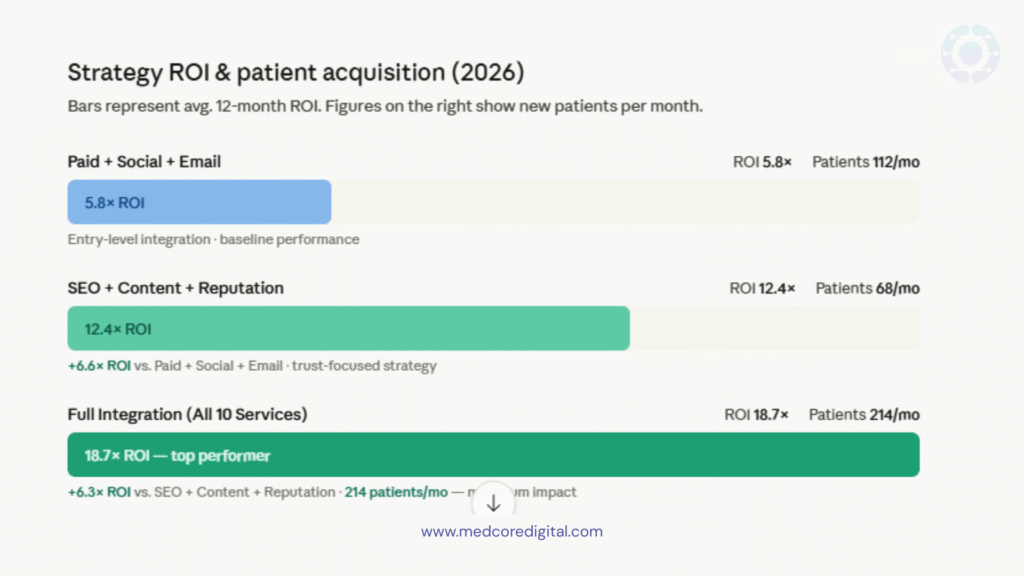
The highest-ROI practices treat every channel as part of one ecosystem. SEO feeds content, which fuels social and email, which supports paid campaigns and reputation. Medcore Digital designs and manages this full-funnel system so you focus on patient care.
Final Thoughts and Next Steps
Healthcare marketing in 2026 is more sophisticated, competitive, and opportunity-rich than ever before. Success no longer belongs to practices that simply “do some marketing.” It belongs to those who thoughtfully combine strategy, compliance, creativity, and technology across all channels, from search engine optimization and content marketing to reputation management, paid advertising, social media, brand management, e-commerce, healthcare PR, email marketing, and events & vendor management.
The practices that will thrive are the ones that treat marketing as a strategic growth engine rather than a cost center. They understand that every patient touchpoint, whether digital or in-person, must deliver trust, education, convenience, and exceptional experience. When all ten pillars of healthcare marketing work in harmony, the results compound: higher visibility, stronger patient trust, increased referrals, better retention, and significantly improved ROI.
The healthcare landscape will continue to evolve rapidly. Voice search, AI-generated content, stricter privacy regulations, and shifting patient expectations will only accelerate. Practices that build a future-proof, integrated marketing system today will hold a decisive advantage tomorrow.
At Medcore Digital, we have spent over 15 years helping hospitals, specialty clinics, urgent care centers, and independent practices navigate these exact challenges. Whether you need a complete marketing transformation or targeted support in specific areas such as boosting local SEO rankings, launching a physician influencer program, managing reputation during a crisis, scaling compliant e-commerce revenue, or executing high-ROI events, our team delivers measurable, HIPAA-compliant results.
We don’t just execute campaigns. We build sustainable marketing systems that align with your clinical excellence and business goals.