
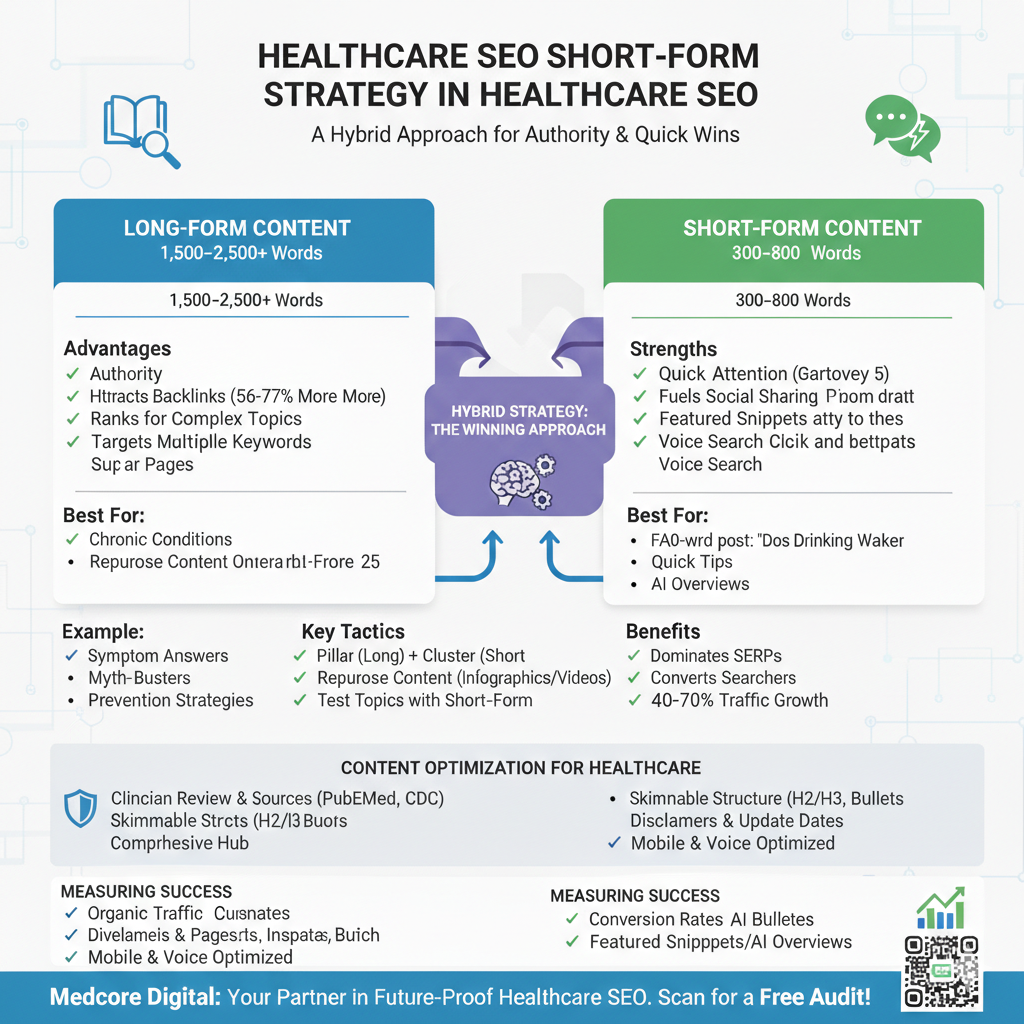
In 2026, healthcare SEO content demands a strategic balance. Patients search for quick symptom answers alongside in-depth treatment explanations. Google’s algorithms, refined through multiple Helpful Content updates, reward depth that genuinely serves user intent while punishing thin or manipulative material. Long-form content (typically 1,500–2,500+ words) builds authority and attracts backlinks, while short-form (300–800 words) captures immediate attention and fuels social sharing. The smartest medical SEO strategy combines both formats to dominate SERPs and convert searchers into patients.
Understanding the Shift in Healthcare Content Preferences
Healthcare queries vary widely. A parent typing “fever in toddler home remedies” wants fast, reliable advice. Someone researching “robotic prostate surgery recovery timeline” expects comprehensive details, risks, and real outcomes. Data from 2025–2026 shows long-form blog posts generate 56–77% more backlinks than shorter ones, directly boosting domain authority.
Yet short-form content thrives in voice search and featured snippets. Concise pages answering exact questions appear in AI overviews and “People also ask” boxes. Google no longer favors length alone depth, relevance, and expertise matter most. In YMYL fields like healthcare, content must demonstrate E-E-A-T through credible sources, clinician authorship, and clear updates.
When Long-Form Content Wins in Medical SEO
Long-form excels for complex topics where patients seek thorough understanding. Comprehensive guides on chronic conditions, procedure comparisons, or preventive health strategies position your practice as the authoritative source.
Advantages of long-form healthcare SEO content:
- Targets multiple related keywords and semantic clusters naturally.
- Increases dwell time and reduces bounce rates key engagement signals.
- Attracts backlinks from medical sites, news outlets, and educational resources.
- Ranks higher in competitive niches where top results average 1,400–2,000+ words.
A cardiology practice publishing 2,000-word articles on “Managing Heart Failure in 2026” with embedded studies and infographics saw organic traffic rise 65% over six months. These pieces satisfy deep intent, feed Google’s knowledge graph, and support pillar-cluster models.
The Power of Short-Form Content for Quick Wins
Short-form content captures top-of-funnel traffic and mobile users. Quick FAQs, myth-busters, or symptom checklists rank well for informational queries and perform strongly in local and voice search.
Key strengths of short-form in healthcare:
- Loads fast on mobile, improving Core Web Vitals.
- Answers zero-click searches directly in snippets.
- Easy to repurpose into social posts, Reels, or email snippets.
- Builds momentum with frequent publishing.
A dermatology clinic’s 500-word posts like “Does Drinking Water Clear Acne?” consistently earn featured snippets, driving branded searches and consultations.
Hybrid Healthcare Content Strategy: The Winning Approach
Top-performing practices in 2026 use both formats synergistically. Short-form acts as the hook drawing traffic and building awareness while long-form provides the depth that converts and retains authority.
Practical hybrid tactics:
- Create pillar pages (long-form) as comprehensive hubs (e.g., “Complete Guide to Managing Diabetes”).
- Support with cluster content (short-form) targeting specific sub-topics (“Best Foods for Blood Sugar Control”).
- Link internally to guide users from quick answers to in-depth resources.
- Use short-form to test topics before investing in long guides.
- Repurpose long-form sections into bite-sized videos or infographics.
This approach aligns with semantic SEO, covers user intent clusters, and satisfies Google’s emphasis on complete, helpful coverage.
Medcore Digital audits existing content to identify gaps, then builds hybrid strategies that balance quick wins with sustained authority. Clients typically see 40–70% traffic growth by blending formats effectively.
Content Optimization Tips Specific to Healthcare
Healthcare content faces stricter scrutiny. Follow these guidelines for both lengths:
- Prioritize clinician review and cite primary sources (PubMed, CDC, specialty societies).
- Structure for skimmability short paragraphs, H2/H3 headings, bullets, tables.
- Include clear disclaimers and update dates regularly.
- Add multimedia infographics in long-form, quick clips in short.
- Optimize for mobile and voice with natural, conversational language.
Regular seo content audit service healthcare checks ensure every piece meets evolving standards, removing thin content while enhancing high-value assets.
Measuring Success: Metrics That Matter
Track performance beyond rankings:
- Organic traffic growth from target keywords
- Dwell time and pages per session
- Conversion rates (appointment bookings)
- Backlink acquisition
- Featured snippet and AI overview appearances
Long-form often drives higher-quality leads; short-form boosts volume and awareness. The combination maximizes ROI.
Choose the Right Mix for Your Practice
No universal rule exists success depends on topic, audience intent, and competition. Analyze top-ranking pages for your keywords: informational queries often favor long-form depth, while navigational or quick-answer searches reward concise clarity.
Medcore Digital’s 15-year expertise in content strategy medical SEO helps providers craft the ideal balance. From audits to full hybrid calendars, their approach delivers compliant, high-performing content that ranks and converts.
Build Your Future-Proof Content Engine
Long-form vs. short-form is not an either/or choice. In healthcare SEO, the future belongs to practices that deliver the right content at the right depth for every stage of the patient journey. Start with a comprehensive seo content audit service healthcare to map your current assets, then build strategically.